Fireproofing Black Futures at CSU Los Angeles
Session 2
Consent and earthen architecture share a critical pedagogy of deep listening

Part 1 of this session began with the understanding that inner child work is consent work. Before anyone tried to shape what we thought, many of us were first taught to control, mute, or contort our bodies, to sit a certain way, hide our displeasure, “fix your face,” or suppress our feelings. Those early interruptions to freedom taught us that our bodies’ truths were negotiable. As adults, those lessons continue inside us; they show up in the tension we hold, in the resentment we feel when we witness a child’s unfiltered freedom, in the long pause it takes to remember a happy moment from childhood because joy often lived next to harm.
Returning to our inner child is a form of memory work, and, as Toni Morrison teaches, memory comes like a flood, disastrously powerful, and transformative. Through that return, we can begin to see how many yeses in our lives were survival and someone else’s expectations, rather than our own consent. To reconnect with our inner child is to interrogate those yeses. It is the act of reclaiming the ones that were ours and to release the ones that were never freely chosen.
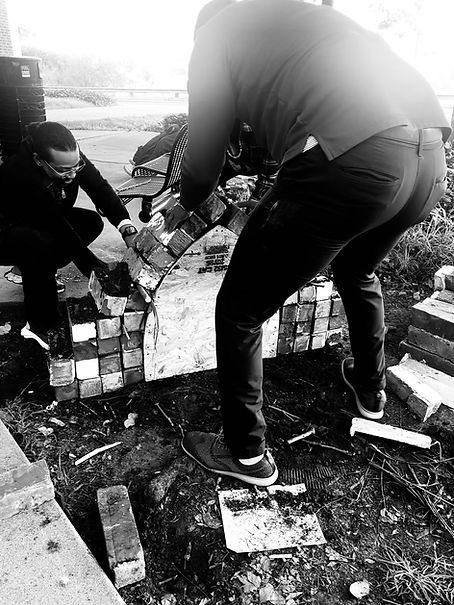
Part 2 explored consent and earthen architecture share a critical pedagogy of deep listening. Both require profound attention to what the body (or the earth) can hold without breaking. In building arches, we learn that structures stand only when they are properly supported and buttressed, just as an embodied yes requires its own inner scaffolding. The earth is profoundly forgiving; it lets us try again and again, and that forgiveness becomes a mirror for how our bodies long to be honored and cared for. When an arch collapses from lack of support or rises through careful attention, it becomes a powerful metaphor for consent, teaching us what it means to listen and respond with our whole bodies, from a place of deep love and forgiveness, so we do not break under pressure.
The Arch Continued